Περισσότερα:
ΑΜΕΡΙΚΑΝΙΚΕΣ ΕΚΛΟΓΕΣ 2016
ΔΙΕΘΝΕΣ
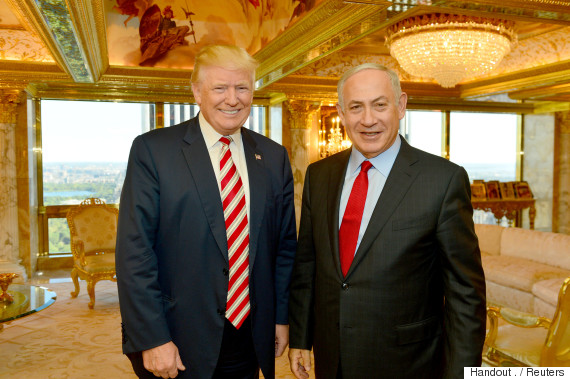
Ντόναλντ Τραμπ
Ισραήλ
υπουργείο εξωτερικών
haaretz.
================================================================
Reconfiguring the “Mixed Town”
217
to Fanon’s “world cut in two.”
126
By posing a theoretical challenge to this idealized
polarized dichotomy whereby divisions and frontiers are “shown by barracks and police
stations,”
127
ethnically mixed towns of the type we have historicized call for refinements
of these analytical tools.
An interesting case in point is historian Mark LeVine’s characterization of Tel-Aviv
as a colonial city that appropriated and dispossessed Arab Jaffa of its land, culture, and
history.
128
Although this was certainly the case for the first half of the 20th century, the
classic colonial city subsequently ceased to provide a nuanced analytical framework. The
victory of the Zionist forces and the ensuing Palestinian tragedy of the
nakba
rocked the
foundations of the social and political systems in Palestine and gave rise to a new political
subject—the Palestinian citizens of Israel. Henceforth, despite state-funded projects of
Judaization, unbreakableglass ceilings, andlimitedmobility, Palestinians inmixedtowns
nevertheless chose to participate in the politics of citizenship.
129
Thus, while Palestinian
towns in the occupied territories, such as Ramallah, Nablus, or Hebron, remain sharply
colonized and cordoned off by powerful external forces, Palestinian residents of mixed
towns within Israel find themselves in a different predicament vis-
`
a-vis the state.
Enjoying equal formal status, Palestinian citizens of Israel tend to channel their
resistance to party politics, civil society, and local-level (municipal) spheres rather than
to the politics of decolonization. Although many of them do invoke narratives and images
of colonization,
130
these are better seen as mayday calls of disenfranchised citizens rather
than collectively organized calls of a national liberation movement. A recent example
is the eruption in 2000 of the second Palestinian uprising in Jerusalem, the Galilee, and
the occupied territories. Triggering Pan–Palestinian solidarity and frustration, it bred a
momentary surge of heated demonstrations on the part of Palestinian residents in mixed
towns and amplified those voices there that call for redefining Israeli citizenship to more
fully include its Palestinian citizens. Even these events, however, failed to mobilize urban
Palestinians within Israel as long-term active participants in the national struggle.
131
In
terms of patterns of political awareness and mobilization, then, mixed towns once again
emerge as markedly distinct from colonial cities.
132
To recapitulate our discussion on the classical colonial city: urban colonialism
in mixed towns has worked in different ways from Ottoman rule through British
administration and ending with the Israeli state. Except for moments of radical confronta-
tion (e.g., in 1936 or 1948), these cities, by virtue of economic exchange, commercial
collaboration, and demographic interpermeation, posed a serious challenge to the logic
of colonial segregation. For cities like Haifa (where joint Jewish–Arab mayorship and
administration persisted until 1948) and Jaffa (whose relations with Tel-Aviv, as LeVine
shows, were nothing but intertwined), the history of colonialism points also to its own
political and conceptual limitations.
The divided city is the second powerful trope and urban archetype, one that conjures
slightly different images of separation walls, barbed wire, and police patrols.
133
They
evoke barriers of race, religion, and nationality, encoded in dualistic metaphors of
East and West, uptown and downtown, and northside and southside. Represented by
archetypes such as Jerusalem, Nicosia, Berlin, or Belfast, these towns predominantly
reproduce formal discrimination through differential entitlement to citizenship and plan-
ning rights. The status of East Jerusalem is perhaps the strongest case for distinguishing
the divided city from the ethnically mixed town. In addition to the explicit project of
218
Dan Rabinowitz and Daniel Monterescu
Judaization, which is more implicit in mixed towns, post-1967 Jerusalemites are not
Israeli citizens but merely permanent residents.
134
The unabashed state violence that
Palestinians encounter on a daily basis dissuades even the most optimistic activists and
analysts from wishful thinking of equal footing and interaction.
The third image we write against is the dual-city model. Although the metaphor of
duality has been applied to colonial cities and divided cities alike, it became associated
within urban studies with economic restructuring and the vicissitudes of late capitalism.
In an age of globablization and increasing disparities between global North and South, the
notion of “duality,” which theorizes the contemporary city as a site of unequal production
of space,
135
successfully captures the uneven nature of social and urban change.
136
Even
in the context of advanced capitalism from which this concept emerged,
137
however,
Mollenkopf and Castells—editors of the book
Dual City
138
—conclude that the dual-
city idiom is imperfect. As Bodn
`
ar aptly argues, “While there are powerful polarizing
tendencies, dichotomies will not suffice: the intersections of class, race and gender
inequalities are more complex.”
139
The concept of urban duality is predicated on the primacy of capital-based dynamics
and class structure, often at the expense of ethnic dynamics, cultural factors, and commu-
nal relations. Thus the dual-city paradigm often reduces multivaried urban differentiation
to the duality of formal and informal labor, and increased professionalization and capital
flows. This analytic weakness notwithstanding, in treating the period of decolonization
in the Middle East, the dual-city approach has greatly contributed to the understanding
of the agonistic transition from colonial occupation to postcolonial self-governance.
In
Urban Apartheid in Morocco
,
140
Abu-Lughod argues that the “caste cleavages” of
social and spatial segregation the French instituted in 1912 had been progressively
transformed by the late 1940s into a “complex but rigid system of class stratification
along ethnic lines.”
141
This, however, was replaced in turn by systemic class-based
residential separation, which emerged in the 1970s.
142
In the context of ethnically mixed towns in Palestine/Israel, the continual presence
of ethnonational conflict does not allow class to overwhelm or supersede ethnicity.
The creeping neoliberalization of the Israeli economy and real estate in the last two
decades, the recent emergence of a new Palestinian middle class, and consequentially
the growing number of young Palestinian professionals who chose to live in mixed towns
have introduced class into an already complicated urban matrix, which became more
fragmented and diversified rather than dual. Thus the model of the dual city, as well
as of the divided city or the colonial city, does little to provide an adequate framework
for explaining and interpreting residential choices, urban-planning dynamics, electoral
coalitions, and urban violence in these towns.
To conclude, although excellent research by individual scholars on ethnically mixed
towns in Israel/Palestine is certainly to be found,
143
we argue that this field of research
can greatly benefit from a new comparative conceptualization of mixed towns as a
historically specific sociospatial configuration. Insisting as we do on the importance of
a joint analytic framework, it is key to bear in mind that these towns emerged de facto—
that is to say, not as a theoretical, ideological, or deterministic model but in practice—as
a new type of city that resulted from the historical hybrid superposition of old and new
urban forms. Out of the collusion of the old Ottoman sectarian urban regime and the
new national, modernizing, and capitalist order (both Palestinian and Zionist)—there
Reconfiguring the “Mixed Town”
219
emerged in the first half of the 20th century and, more dramatically, since 1948, a new
heteronomous urban form.
144
Bearing traces of the old one, it was in fact a fragmented
amalgam of various city forms.
If the story of mixed towns has a moral, it is perhaps that nationalistic attempts at
effacing and rewriting history as part of an effort to create a country (or at least a
cityscape) that is ethnically cleansed are bound to fail. This could perhaps provide a
“mixed” space of hope.
NOTES
Author’s note:
We wish to thank the participants of the international workshop “Ethnically Mixed Towns
in Israel/Palestine,” which took place first in 2002 at the American Anthropological Association annual
meeting and in 2003 at the Jerusalem Van Leer Institute: Deborah Bernstein, Glenn Bowman, David De
Vries, Elizabeth Faier, Hagith Gor-Ziv, Ghazi Falah, Tamir Goren, Jasmin Habib, Laurie King-Irani, Mark
LeVine, Hanna Herzog, Amalia Sa
–
ar, Salim Tamari, Rebecca Torstrick, Anton Shammas, Haim Yacobi, and
Ra
»
ef Zreik. Daniel Monterescu acknowledges with thanks the support of the University of Chicago and
Central European University, the Palestinian–American Research Center, the Lady Davis Fellowship Trust at
the Hebrew University, the National Science Foundation, the U.S. Institute of Peace, Centre de Recherche
Franc
̧ais de J
́
erusalem, the Dan David Prize at Tel-Aviv University, the Harry Frank Guggenheim Foundation,
and the Josephine de K
́
arm
́
an Foundation. We are grateful to architect Roy Fabian for designing the maps and
illustrations. Final thanks are due to
IJMES
anonymous reviewers for their insightful remarks.
1
Susan Slyomovics, ed.,
The Walled Arab City in Literature, Architecture and History: The Living Medina
in the Maghrib
(London: Frank Cass, 2001).
2
James E. Housefield, “Orientalism as Irony in Gerard de Nerval’s Voyage en Orient,”
Journal of North
African Studies
5 (2000): 10–24.
3
Max Weber,
The City
, trans. and ed. Don Martindale and Gertrud Neuwirth (Glencoe, Ill.: Free Press,
1958); Albert H. Hourani, “The Islamic City in the Light of Recent Research,” in
The Islamic City: A
Colloquium
, ed. A. H. Hourani and S. M. Stern Hourani (Philadelphia, Pa.: University of Pennsylvania
Press, 1970); Janet Abu-Lughod, “The Islamic City—Historic Myth, Islamic Essence, and Contemporary
Relevance,”
International Journal of Middle East Studies
19 (1987): 155–76; Daniel B. Monk,
An Aesthetic
Occupation: The Immediacy of Architecture and the Palestine Conflict
(Durham, N.C.: Duke University Press,
2002).
4
Francis E. Peters,
Jerusalem and Mecca: The Typology of the Holy City in the Near East
(New York:
New York University Press, 1986); Oleg Grabar,
The Shape of the Holy: Early Islamic Jerusalem
(Cambridge,
Mass.: Harvard University Press, 1998); Zali Gurevitch and Gideon Aran, “The Land of Israel: Myth and
Phenomenon,”
Studies in Contemporary Jewry
, 10 (1994): 195–210.
5
Edward Said,
Orientalism
(New York: Vintage Books, 1979).
6
Janet L. Abu-Lughod and Richard Hay,
Third World Urbanization
(Chicago: Maaroufa Press, 1977).
7
Aziz Al-Azmeh, “What is the Islamic City?”
Review of Middle East Studies
2 (1976): 1–12; Dale
Eickelman, “Is There an Islamic City? The Making of a Quarter in a Moroccan Town,”
International Journal
of Middle East Studies
5 (1974): 274–94; Abu-Lughod, “The Islamic City”: 155–76; Andr
́
e Raymond, “Islamic
City, Arab City: Orientalist Myths and Recent Views,”
British Journal of Middle Eastern Studies
21 (1994):
3–18.
8
Franz Fanon,
TheWretchedoftheEarth
(New York: Penguin, 1963); Anthony King, “Colonialism,
Urbanism, and the Capitalist World Economy,”
International Journal of Urban and Regional Research
13 (1989): 1–18; Zeynep C
̧ elik,
Urban Forms and Colonial Confrontations: Algiers Under French Rule
(Berkeley, Calif.: University of California Press, 1997); Janet Abu-Lughod,
Rabat, Urban Apartheid in
Morocco
(Princeton, N.J.: Princeton University Press, 1980).
9
Timothy Mitchell,
Colonising Egypt
(Berkeley, Calif.: University of California Press, 1988).
10
Haim Yacobi and Relli Shechter, “Rethinking Cities in the Middle East: Political Economy Planning
and Lived Space,”
Journal of Architecture
10 (2005): 499–511.
11
Throughout this paper, the urban configurations under study in Israel–Palestine are labeled “towns”
rather than “cities.” We elaborate on this terminological choice later in this paper.
220
Dan Rabinowitz and Daniel Monterescu
12
In
Edge of Empire
, Jacobs writes, “The postcolonial critique has mobilized a new conceptual framework
which, while not denying the efficacy of imperialist structures of domination, uncovers their often anxious
contingency and internal variability.” See Jane Jacobs,
Edge of Empire
(London: Routledge, 1996), 14. See
also Anthony D. King, “Actually Existing Postcolonialism: Colonial Urbanism and Architecture after the
Postcolonial Turn,” in
Postcolonial Urbanism
, ed. Ryan Bishop, John Phillips, and Yeo Wei Wei (New York:
Routledge, 2003), 167–83. From this antiessentialist perspective, it is clear that postcoloniality “is still deeply
entertwined with colonial formations” but is not reducible to them (Jacobs,
Edge of Empire
, 14).
13
Nezar AlSayyad, ed.,
Hybrid Urbanism
(Westport, Conn.: Praeger, 2001); Edward Soja,
Thirdspace
(Oxford: Blackwell, 1996); Homi K. Bhabha, “The Third Space: Interview with Homi Bhabha,” in
Identity:
Community and Culture Difference
, ed. Jonathan Rutherford (London: Lawrence and Wishart, 1990), 207–21;
Daniel Monterescu, “Stranger Masculinities: Gender and Politics in a Palestinian–Israeli ‘Third Space,’” in
Islamic Masculinities
, ed. Lahoucine Ouzgane (London: Zed Books, 2006), 123–42.
14
Albert Memmi,
Portrait du Colonis
́
e, Portrait du Colonisateur
(Paris: Gallimard, 1985).
15
Jean Comaroff and John Comaroff,
Of Revelation and Revolution
(Chicago: University of Chicago
Press, 1997), 403.
16
Ibid.
17
Henri Lefebvre,
Writings on Cities
, trans. and ed. Eleonore Kofman and Elizabeth Lebas (Cambridge,
Mass.: Blackwell, 1996), 101.
18
David Harvey, “Contested Cities: Social Process and Spatial Form,” in
Transforming Cities: Contested
Governance and New Spatial Divisions
, ed. N. Jewson and S. McGregor (London: Routledge, 1997), 19–27.
19
Weber,
The City;
Robert Redfield and Milton B. Singer, “The Cultural Role of Cities,”
Economic
Development and Cultural Change
3 (1954): 53–73.
20
Neil Smith,
Uneven Development: Nature, Capital and the Production of Space
(Oxford: Basil Blackwell,
1984); Engin F. Isin,
Being Political: Genealogies of Citizenship
(Minneapolis, Minn.: University of Minnesota
Press, 2002); Henri Lefebvre,
The Production of Space
(Oxford: Blackwell, 1991).
21
Georg Simmel, “The Metropolis and Mental Life,” in
Metropolis: Center and Symbol of Our Times
,ed.
Philip Kasinitz (New York: New York University Press, [1903], 1995).
22
Benedict Anderson,
Imagined Communities. Reflections on the Origin and Spread of Nationalism
, 2nd
ed. (New York: Verso, 1991).
23
Setha Low, “The Anthropology of Cities: Imagining and Theorizing the City,”
Annual Review of Anthro-
pology
25 (1996): 383–409; James Holston and Arjun Appadurai, “Introduction,” in
Cities and Citizenship
,
ed. James Holston (Durham, N.C.: Duke University Press, 1999).
24
Anthony D. King,
Urbanism, Colonialism, and the World-Economy: Cultural and Spatial Foundations
of the World Urban System
(London: Routledge, 1990).
25
Lefebvre,
Writings on Cities
.
26
To eschew this metropolitan bias, we refrain from referring to the ethnically contested urban forms and
clusters under scrutiny as “cities.” In the case of Jaffa, Haifa, Ramle, Lydda, and Acre—all towns of middle
size and scale—we believe the term “towns” is both more modest and accurate.
27
Roger Owen, ed.,
Studies in the Economic and Social History of Palestine in the 19th and 20th Century
(Carbondale, Ill.: Southern Illinois University Press, 1982); Beshara Doumani,
Rediscovering Palestine:
Merchants and Peasants in Jabal Nablus 1700–1900
(Berkeley, Calif.: University of California Press, 1995).
28
Peter Sahlins,
Boundaries: The Making of France and Spain in the Pyrenees
(Berkeley, Calif.: University
of California Press, 1989).
29
John G. Ruggie, “Territoriality and Beyond: Problematizing Modernity in International Relations,”
International Organization
47 (1993): 139–74.
30
Juval Portugali,
Implicate Relations: Society and Space in the Israeli-Palestinian Conflict
(Dordrecht:
Kluwer Academic, 1993).
31
Achille Mbemb
́
e,
On the Postcolony
(Berkeley, Calif.: University of California Press, 2001).
32
Oren Yiftachel,
Ethnocracy: Land and Identity Politics in Israel/Palestine
(Philadelphia, Pa.: University
of Pennsylvania Press, 2006).
33
Daniel Monterescu,
Spatial Relationality: Ethnic Relations, Urban Space and the State in Jewish–Arab
Mixed Towns, 1948–2004
(PhD diss., University of Chicago, 2005), 365.
34
Yedioth Aharonot
, 24 February 1943.
35
“The War of the Southern Neighborhoods over the Annexation to Tel-Aviv,”
Yedioth Tel-Aviv-Yafo
22
(1953): 28.
Reconfiguring the “Mixed Town”
221
36
Dan Rabinowitz and Khawla Abu Baker,
Coffins on Our Shoulders: The Experience of the Palestinian
Citizens of Israel
(Berkeley, Calif.: University of California Press, 2005).
37
Examples of such projects include the nongovernmental organization Shatil’s “Mixed Cities Project—
Equal Access to Housing Rights” and various initiatives by the Arab Center for Alternative Planning. Recent
reports in Hebrew and Arabic by Shatil have addressed the predicament of the Palestinian communities in
cities like Jaffa, Lydda, and Ramle. See Yusef Jabarin,
The Arab Citizens in Mixed Towns
(Jerusalem: Shatil,
2002), or Daniel Monterescu,
The Palestinian Community in Jaffa: A Social Planning Report
(Jerusalem:
Shatil, 2007).
38
Nir, Ori, and Lili Galili, “Mahanot ha-Plitim shel ha-
–
Arim ha-
–
Israeliyot” (“The Refugee Camps of
Israeli Towns”),
Ha
»
aretz
(12 December 2000).
39
Nabih Bashir,
Ha-Toshavim ha-Falastinim be-
–
Arim ha-Me
–
oravot
(
The Palestinian Residents in Mixed
Cities
) (Jerusalem: Center for Alternative Culture, 1996).
40
Haim Yacobi,
Urban Ethnocracy: The Building of a Town and the Construction of Identity: The Case
of Lod
(PhD diss., Ben-Gurion University, 2003).
41
This term was used a number of times by Palestinian speakers in public meetings and at an academic
conference in 2002–2003. The alteration between “targeted city” and “shared city” is often strategic. For
example, during a meeting with potential Palestinian donors from Jordan, the term “targeted” would be
employed, to underline the Israeli majority and the state as a shared enemy of those seeking assistance and the
potential donor. In contexts in which cooperation with Jews and Israeli institutions is the goal, “shared town”
would more likely be used.
42
Dan Rabinowitz,
Overlooking Nazareth: The Ethnography of Exclusion in Galilee
(Cambridge: Cam-
bridge University Press, 1997).
43
See for example
Al-Ittihad
(1945): 1.
44
Portugali,
Implicate Relations
.
45
Benjamin Braude and Bernard Lewis, ed.,
Christians and Jews in the Ottoman Empire: The Func-
tioning of A Plural Society
(New York: Holmes & Meier Publishers, 1982); Emily Gottreich, “On the
Origins of the
Mellah
of Marrakesh,”
International Journal of Middle East Studies
35 (2003): 287–
305.
46
Millet
is the Ottoman term for an autonomous self-governing religious minority legally protected under
Ottoman law. The literal meaning of the term refers to the separate legal courts under which minorities
ruled their own, with little interference from the Ottoman government. The prominent
millet
s were Jewish and
Christian (mainly Greek, Armenian, and Catholic)—groups that were spread across the empire with significant
minorities in many major cities. The autonomy of such groups could not have been premised on a territorial
principle without challenging Ottoman sovereignty. Each
millet
was under the supervision of a leader, most
often a religious patriarch, who reported directly to the Ottoman sultan. Each community was responsible to
the central government for administrative obligations, such as taxes and internal security, and had authority
to supervise functions not provided by the state. Beginning in 1856, the secular legal reforms known as the
Tanzimat (reorganization) eroded much of the religiously based administrative autonomy of the
millet
s, which
was further altered by the increasing influence of European powers in the Middle East.
47
The Armenian quarter of Jerusalem and segments of Middle Eastern cities still recognized as the “Jewish
quarter” (
harat al-Yahud
) are relics of this regulated urban pattern.
48
A similarly relatively stable structure of affiliations was also known in premodern Europe. See Friedrich
Meinecke,
Cosmopolitanism and the National State
(Princeton, N.J.: Princeton University Press, 1970);
Ruggie, “Territoriality and Beyond.”
49
Ruth Kark,
Jaffa—Growth of a City, 1799–1917
(Jerusalem: Yad Ben-Tzvi, 1984), 160.
50
Owen,
Studies in the Economic and Social History of Palestine
.
51
Baruch Kimmerling and Joel Migdal,
Palestinians: The Making of a People
(New York: Free Press), 39.
52
Jerusalem, with its many religious sects and administrative offices, was the only truly urban center in
the mountains. For a comparison between the coast and the inland mountain region of Palestine before 1948,
see Salim Tamari,
The Mountain against the Sea: Studies in Palestinian Urban Culture and Social History
(Ramallah: Muwatin, 2005).
53
Kimmerling and Migdal,
Palestinians
.
54
Secondary and vocational schools established and operated by European missionary orders were as
open to Muslim and Jewish children as they were to Christian pupils. This notwithstanding, the main impact
in terms of class was on the ascent of Christian Palestinians, who later took center stage in the growth of
222
Dan Rabinowitz and Daniel Monterescu
Arab nationalism. See Orit Ichilov and Andr
́
e Elias Mazawi,
Between State and Church: Life-History of a
French-Catholic School in Jaffa
(Frankfurt: P. Lang, 1996).
55
Prior to 1820 Jaffa had a small, unstable, and largely insignificant Jewish population of some 200 people.
Kark,
Jaffa
, 134. Likewise, a Jewish presence in Acre had been in existence since 1744. See Yehoshua Luria,
Acre, City of Walls: Jews amongst Arabs, Arabs amongst Jews
(Tel-Aviv: Y. Golan, 2000), 173.
56
Jerusalem had Yemin Moshe built in the 1869s, the German colony in 1873, Abu Tor in the 1870s, and
Musrara in 1875. Jaffa had the Jewish neighborhoods of Neve Tzedek and Neve Shalom, established in 1887
and 1885, respectively.
57
Mark Levine,
Overthrowing Geography: Jaffa, Tel-Aviv and the Struggle for Palestine 1880–1948
(Berkeley, Calif.: University of California Press, 2005).
58
Deborah Bernstein, “Contested Contact: Proximity and Social Control in Pre-1948 Jaffa and Tel-Aviv,”
in
Mixed Towns, Trapped Communities
, ed. Daniel Monterescu and Dan Rabinowitz (Aldershot, U. K.: Asghate
Publishing, 2007).
59
Hanna Ram,
Ha-Kehila ha-Yehudit be-Yafo: Mi-Kehila Spharadit le-Merkaz Tzioni
(The Jewish Com-
munity in Jaffa: From Sephardic Community to Zionist Center) (Jerusalem: Carmel Press, 1996), 328.
60
Scott Atran, “The Surrogate Colonization of Palestine, 1917–1939,”
American Ethnologist
17 (1989):
719–44.
61
Michel De Certeau,
The Practice of Everyday Life
(Berkeley, Calif.: University of California Press,
1984).
62
Levine,
Overthrowing Geography
; Monterescu,
Spatial Relationality
, 42.
63
In his preface to Aricha’s book on Jaffa, Mayor Haim Levanon refers to the conquest of Jaffa as the
forced normalization of a mother–child relationship. See Yosef Aricha, ed.,
Yafo: Miqra
–
a Historit-Sifrotit
(Jaffa: Historical-Literary Reader) (Tel-Aviv: Tel-Aviv Municipality Press, 1957), 7. Quoting from the Bible,
he writes, “Against its will, Jaffa exemplifies the verse ‘he will turn the heart of the fathers to the children
and the heart of the children to their fathers’ (Malachi 3:23–24); the heart of the mother Jaffa—Ancient-new
Hebrew Jaffa—turned to its daughter Tel-Aviv. And they became one, the city of Tel-Aviv-Jaffa, subject to
one municipal authority.”
64
According to Golan, Tel-Aviv grew into a small-sized town of 15,000 in 1921 and 46,000 in 1931.
See Arnon Golan, “Zionism, Urbanism, and the 1948 Wartime Transformation of the Arab Urban System in
Palestine,”
Historical Geography
27 (1999). Urban growth accelerated in the 1930s with the growing numbers
of Jews who fled Europe. In 1934 Tel-Aviv, at that point the largest city of Palestine, became formally
independent from Jaffa, and in 1939 its population numbered about 130,000, rising to 166,000 in 1944. In
parallel, Jaffa developed at a rapid but relatively slower pace. Numbering 50,000 (including 10,000 Jews) in
1913, its population decreased almost by half during World War I and numbered 32,000 (including 5,000
Jews) in 1922. In the next decade, Jaffa’s population doubled, from 51,000 (including 7,000 Jews) in 1931
to 94,000 in 1944 (including 28,000 Jews). The significant increase in the number of Jews in Jaffa after the
1921 violent events resulted from the development of separate new neighborhoods (Florentin and Shapira)
bordering on Tel-Aviv’s south side.
65
LeVine,
Overthrowing Geography
.
66
Tamir Goren, “Separate or Mixed Municipalities? Attitudes of Jewish Yishuv Leadership to the Mixed
Municipality during the British Mandate: The Case of Haifa,”
Israel Studies
9 (2004): 101–24.
67
See Rabinowitz and Abu Baker,
Coffins on Our Shoulders
, chap. 2, for an account of the cultural life in
Palestinian towns before 1948.
68
Rashid Khalidi,
Palestinian Identity: The Construction of Modern National Consciousness
(New York:
Columbia University Press, 1997).
69
In the 1920s Acre’s Jewish population grew to more than 800—15 percent of the town’s 6,000 inhabitants.
This was mainly due to the influx of European immigrants who joined the small Sephardi community, who
had resided in the town since 1744. In the wake of the 1929 hostilities, most Jews left Acre and settled in
Haifa and the vicinity. See Luria,
Acre, City of Walls
, 411.
70
Mary Louise Pratt, “Arts of the Contact Zone,” in
Ways of Reading
, ed. David Bartholomae and Anthony
Petroksky (New York: Bedford/St. Martin’s, 1999).
71
David De Vries, “British Rule and Arab–Jewish Coalescence of Interest: The 1946 Civil Servants’ Strike
in Palestine,”
International Journal of Middle East Studies
36 (2004): 613–38.
72
This was the case of Jewish and Arab orchard owners and tradesmen attempting to retain their business
relations through the turmoil of the 1936 revolt and during warfare in 1947–48.
Reconfiguring the “Mixed Town”
223
73
For an insightful analysis of the Palestinian urban middle class in the 1940s and the effect of the
nakba
,
see Sherene Seikaly,
Meatless Days: Consumption and Capitalism in Wartime Palestine 1939–1948
(PhD
diss., New York University, 2007).
74
Salim Tamari,
Jerusalem 1948: The Arab Neighborhoods and their Fate in the War
(Jerusalem: Institute
of Jerusalem Studies, 1999).
75
Benny Morris,
The Birth of the Palestinian Refugee Problem 1947–1949
(Cambridge: Cam-
bridge University Press, 1987); Tamir Goren, “The War for the Mixed Towns in the North” in
Is-
rael’s War of Independence 1948–1949
, ed. Alon Kadish (Tel-Aviv: Ministry of Defense, 2004), 171–
206.
76
Moshe Arenwald, “The Military Campaign in Jerusalem in the War of Independence,” in ibid., 342.
77
Goren,
War on the Mixed Towns in the North
, 195.
78
Arnon Golan,
Shinuy Merhavi, Totza
»
at Milhama: Ha-Shetahim ha-
–
Arviyim Leshe
–
avar bi-Medinat
Yisrael, 1948–1950
(Wartime Spatial Changes: Former Arab Territories Within the State of Israel, 1948–
1950) (Be
»
er Sheva, Israel: Ben Gurion University Press, 2001), 12; Tamir Goren, ed.,
From Dependence to
Integration: Israeli Rule and the Arabs of Haifa, 1948–1950—A Historical and Geohraphical Analysis
(Haifa,
Israel: University of Haifa, 1996).
79
Palestinian citizens of Israel, most often referred to in Jewish-Israeli parlance as “Israeli Arabs” and
“Arabs in Israel,” are labeled by themselves and by other Arabs as the “Arabs of 1948” or “Arabs of the
inside.” For a comprehensive discussion of the politics of labeling this group, see Dan Rabinowitz, “Nostalgia
Mizrahit: Eikh Hafkhu ha-Falastinim le-
–
Arviyey Yisrael” (“Oriental Nostalgia: How the Palestinians Became
‘Israel’s Arabs’”),
Teorya Uvikoret
3 (1993): 141–52.
80
Walid Khalidi,
All that Remains: The Palestinian Villages Occupied and Depopulated by Israel in 1948
(Washington, D.C.: Institute of Palestine Studies, 1992).
81
Morris,
The Birth of the Refugee Problem
.
82
Arnon Golan,
Wartime Spatial Changes, 80
.
83
Tamir Goren, ed.
From Dependence to Integration: Israeli Rule and the Arabs of Haifa, 1948–1950—A
Historical and Geographical Analysis
(Haifa, Israel: University of Haifa, 1996), 154–64.
84
Arnon Golan,
Wartime Spatial Changes, 41
.
85
Ibid, 164.
86
Ibid.
87
Ibid, 94.
88
Martial law was lifted from these urban neighborhoods in June 1949. The rest of Israel’s Palestinian
community, however, remained under military governorate until 1966.
89
Arnon Golan,
Wartime Spatial Changes
.
90
Salim Tamari,
Jerusalem 1948
.
91
Baruch Kimmerling,
Zionism and Territory
(Albany, N.Y.: State University of New York Press, 1983).
92
Monterescu,
Spatial Relationality
, 43.
93
Madrikh Yafo
(The Jaffa Guide) 1949, 41 (our translation, emphasis added).
94
Kimmerling,
Zionism and Territory
.
95
Dan Rabinowitz, “An Acre is an Acre is an Acre? Differentiated Attitudes to Social Space and Territory
on the Jewish–Arab Urban Frontier in Israel,”
Urban Anthropology
21 (1992): 67–89.
96
Oren Yiftachel, “Spatial Planning, Land Control and Jewish-Arab Relations in Galilee,”
City and Region
23 (1994): 55–98.
97
For the case of Lydda-Lod see Yacobi,
Urban Ethnocracy;
Benny Nurieli,
Strangers in a National Space
(master’s thesis, Tel-Aviv University, 2004).
98
As
–
ad Ghanem, Thabet Abu Rass, and Ze
»
ev Rosenhak, “Local Government, Community and Welfare,”
in
After the Rift: New Directions for Government Policies Towards the Arabs in Israel. Emergency Report
submitted to PM Ehud Barak
, November 2000. Prepared and published as a monograph by a multidisciplinary
team of researchers in Israeli universities.
99
Dean MacCannel,
The Tourist: A New Theory of the Leisure Class
(NewYork: Schocken, 1975).
100
Salim Tamari, “Bourgeois Nostalgia and the Abandoned City” in
Mixed Towns, Trapped Communities
.
101
Carol Bardenstein, “Threads of Memory and Discourses of Rootedness: Of Trees, Oranges and the
Prickly Pear Cactus in Israel/Palestine,”
Edebiyatl
8 (1998): 1–36.
102
Pierre Nora, “Beyond Memory and History: Les Lieux de M
́
emoire,”
Representations
26 (1984): 7–
24.
224
Dan Rabinowitz and Daniel Monterescu
103
For data on Palestinian immigration into newly mixed towns, see Dan Rabinowitz, “To Sell Or Not To
Sell? Theory Versus Practice, Public Versus Private, and the Failure of Liberalism: The Case of Israel and
its Palestinian Citizens,”
American Ethnologist
21 (1994): 823–40; Ghazi Falah, “Land Fragmentation and
Spatial Control in the Nazareth Metropolitan Area,”
The Professional Geographer
44 (1992): 30–44; Hana
Hamdan, “Upper Nazareth as a Mixed Town: Palestinian In-migration and Issues of Spatial Behavior,” in
–
Ir Yisraelit O
–
Ir be-Yisrael
(Israeli City or City in Israel) ed. Haim Yacobi and Tovi Fenster (Jerusalem:
Ha-Kibbutz Ha-Meuhad, 2006); Oren Yiftachel,
Ethnocracy, 2006
.
104
Rabinowitz,
Overlooking Nazareth
.
105
Ibid., 8, 52–71.
106
Nir Ori and Lili Galili, “One Morning the Mayor of Natzerat Illit Woke Up to Discover that he is the
Mayor of a Mixed Town,”
Ha
»
aretz
(23 December 2001).
107
Prior to 1948 Safad had some 10,000 Palestinian residents and some 1,500 Jews. Beer-Sheva was
exclusively Arab (Palestinians, Bedouins, and Egyptians) prior to the war.
108
Hanna Herzog, “Mixed Towns as Places of Choice: Residential Preferences of Palestinian Women” in
Mixed Towns, Trapped Communities
.
109
Erik Cohen was one of the first writers to focus on the ways in which religious codes and formal civil
law complicate the civil status of Jewish–Arab mixed-marriage offspring. The religion of a child born to a
mixed couple, he writes, is often indeterminate, contested, and subject to passionate family disagreements.
See Erik Cohen, “Mixed Marriage in an Israeli Town,”
Jewish Journal of Sociology
11 (1969): 41–50.
Sivan Schneider and Nasser Abadi, in their works on mixed marriages in Jaffa and Israel, respectively,
generally show that although there are structural similarities between mixed marriages in Israel and exogamic
marriage patterns in other countries, some characteristics are unique to the Israeli context. Most cases of
Jewish–Arab mixed marriage in Israel consist of an Arab-Palestinian man and a Jewish woman, who are often
ostracized by their own social environment. See Nasser Abadi,
Mixed Marriage Between Arabs and Jews in
Israel
(master’s thesis, Tel Aviv University, 1991); Sivan Schneider,
Trapped Self: Self-Concepts and Identity
of Arab–Jewish Mixed Families and Dual-Religion Children
(master’s thesis, University of Chicago, 2003).
Schneider and Abadi concur that most Jewish–Arab mixed couples choose to settle in Arab communities and
that the majority of Jewish women end up converting to Islam. However, as Schneider shows, this “integration”
process is often disharmonious, and increasing numbers of mixed couples are pushed to mixed towns, where
they are at greater liberty to express their trapped identity.
Although no official statistics are available, a rather alarmist report prepared by the right-wing Jewish
Lev L
»
Achim Association claims that since 1948 more than 3,000 Jewish women have converted to Islam
and married Arab men in Muslim courts. See Ze
»
ev Shtigletz, “When Israeli Women Marry Arab Men,”
http://www.israelnationalnews.com/News/News.aspx/72865 (accessed 15 June 2007). The report asserts that
some 2,000–3,000 women are married to Arab counterparts by common-law marriage and that another 10,000–
20,000 Jewish women are dating Arabs at any given time. These estimates, unfounded as they are, are best
read as extreme markers of Jewish-Israeli xenophobia.
110
Daniel Monterescu, “Inner Space and High Ceilings: Agents and Ideologies of Jewish Gentrification,”
Spatial Relationality
, chap. 4.
111
Dan Rabinowitz, “The Palestinian Citizens of Israel, the Concept of Trapped Minority and the Discourse
of Transnationalism in Anthropology,”
Ethnic and Racial Studies
24 (2001): 64–85.
112
Daniel Monterescu,
Stranger Masculinities
(London: Zed Books, 2006).
113
Oren Yitachel and Haim Yacobi, “Urban Ethnocracy: Ethnicization and the Production of Space in an
Israeli ‘Mixed City,’”
Environment and Planning D: Society and Space
21 (2003): 673–93. In this article,
which focuses on Lydda/Lod, Yiftachel and Yacobi argue that ethnonationalism, the capitalist logic, and
modern governance conflate to become three engines of the same sociopolitical order. They define urban
ethnocracy as a setting “where a dominant group appropriates the city apparatus to buttress its domination and
expansion,” ibid.
114
The main case study for Yiftachel and Yacobi’s analysis, Lydda/Lod is indeed the paradigmatic case of
urban ethnocracy, with high segregation rates and a radically disempowered Palestinian community subject
to concerted attempts of Judaization. Jaffa, however, has only one third of its 20,000-strong Arab population
living in a predominantly Palestinian quarter (
–
ajam
̄
ı
), and another third lives in the mixed area of Jerusalem
Boulevard. The rest is scattered in the eastern part of the city (Tel-Aviv Municipality Statistical Bureau,
2006). Finally, Haifa, which entertains a predominantly well-off Christian population, became the home for an
emerging urban middle class of liberal Palestinians who settle in previously Jewish-dominated neighborhoods
Reconfiguring the “Mixed Town”
225
and thus displays a third residential pattern. See Ghazi Falah, Michael Hoy, and Rakhal Sarker, “Co-existence
in Selected Mixed Arab-Jewish Cities in Israel: By Choice or by Default?”
Urban Studies
37 (2000): 775–96.
115
Geographer Fred Boal devised a classification system for the study of ethnically mixed cites, which he
designated the “Scenarios Approach,” in which a scenario is defined as an imagined set of ethnic circumstances
in a particular city. A quick indicative categorization would subsume U.S. cities of the early 20th century
under the label of “assimilation,” late 20
th
-century Toronto under “pluralism,” contemporary U.S. black
ghettos under “segmentation,” places like Jerusalem and Belfast under “polarization,” and Sarajevo in the
early 1990s under “cleansing.” Within this simplified classification, Palestinian–Israeli mixed towns would
probably range between polarization (Lydda, Ramle), segmentation (Jaffa, Acre), and pluralism (Haifa). See
Fred Boal, “From Undivided Cities to Undivided Cities: Assimilation to Ethnic Cleansing,”
Housing Studies
14 (1999): 585–600.
116
Zachary Lockman,
Comrades and Enemies: Arab and Jewish Workers in Palestine, 1906
–
1948
(Berkeley, Calif.: University of California Press, 1996); Rebecca L. Stein and Ted Swedenburg, “Popular
Culture, Relational History, and the Question of Power in Palestine and Israel,”
Journal of Palestine Studies
33 (2004): 5–20; Monterescu,
Spatial Relationality
, 2005.
117
See also Ronen Shamir,
The Colonies of Law: Colonialism, Zionism, and Law in Early Mandate Palestine
(Cambridge: Cambridge University Press, 2000).
118
Lockman,
Comrades and Enemies
, 12.
119
Ulrich Beck, “Toward a New Critical Theory with a Cosmopolitan Intent,”
Constellations
10 (2003):
453–68; Daniel Monterescu, “Heteronomy: The Cultural Logic of Urban Space and Sociality in Jaffa,” in
Mixed Towns, Trapped Communities
, 160.
120
Lahoucine Ouzgane and Daniel Coleman, “Introduction,”
Jouvert: Journal of Postcolonial Studies
1
(1998): 1–10.
121
Memmi,
Portrait du Colonis
́
e
.
122
We follow here Bodn
́
ar’s excellent analysis of the theoretical relations between these key metaphors.
See Judit Bodn
́
ar, “Metaphors We Live In: Dual Cities, Uneven Development and the Splitting of Unitary
Frames,” in manuscript; see also Low,
The Anthropology of Cities
.
123
This is best exemplified in Fanon’s own words: “The settlers’ town is strongly built, all made of stone
and steel. It is a brightly-lit town; the streets are covered with asphalt, and the garbage-cans swallow all the
leavings, unseen, unknown and hardly thought about
...Thetownbel
onging to the colonized people, or at
least the native town, the Negro village, the medina, the reservation, is a place of ill-fame, peopled by men of
evil repute. They are born there, it matters little where and how they die there; it matters not where, nor how.
It is a world without spaciousness; men there live on top of each other . . . The native town is a crouching
village, a town on its knees, a town wallowing in the mire. It is a town of niggers and dirty Arabs.” Fanon,
Wretched of the Earth
, 30.
124
Paul Rabinow,
Reflections of Fieldwork in Morocco
(Berkeley, Calif.: University of Caliornia Press,
1977); Mitchell,
Colonising Egypt
.
125
Janet Abu-Lughod, “A Tale of Two Cities: The Origins of Modern Cairo,”
Comparative Studies in
Society and History
7 (1965): 429–57.
126
Fanon,
Wretched of the Earth
, 29.
127
Ibid.
128
Levine,
Overthrowing Geography
.
129
Rabinowitz,
The Concept of the Trapped Minority
.
130
Elie Zureik,
The Palestinians in Israel: A Study in Internal Colonialism
(Boston: Routledge and Kegan
Paul, 1979).
131
Rabinowitz and Abu Baker,
Coffins on Our Shoulders
; on the October 2000 events in Jaffa, see Mon-
terescu, “Heteronomy” in
Mixed Towns, Trapped Communities
. See also Baruch Kimmerling,
The End of
Ashkenazi Hegemony
(Jerusalem: Keter, 2001).
132
This notion is supported by Bayat’s work on the limits on politicization of urban subalterity in the global
South. See Asef Bayat, “From ‘Dangerous Classes’ to ‘Quiet Rebels’: Politics of the Urban Subaltern in the
Global South,”
International Sociology
15 (2000): 533–38. Bayat suggests what he calls “quiet encroachment”
as the prevailing strategy that enables marginalized groups “
...tosurviveandb
etter their lot” (553). Haim
Yacobi’s work on Lydda provides another instance of a similar microanalysis of resistance in an ethnically
mixed town. See Haim Yacobi, “From Urban Panopticism to Spatial Protest,”
Surveillance and Society
2
(2003): 55–77.
226
Dan Rabinowitz and Daniel Monterescu
133
Low,
Anthropology of Cities
.
134
Michael Sorkin, ed.
The Next Jerusalem: Sharing the Divided City
(New York: Monacelli, 2002); Meron
Benvenisti,
Jerusalem, the Torn City
(Minneapolis, Minn.: University of Minnesota Press, 1976). See human
rights organization B
»
Tselem’s definition of permanent residency versus citizenship. “Permanent residency
differs substantially from citizenship. The primary right granted to permanent residents is to live and work in
Israel without the necessity of special permits. Permanent residents are also entitled to social benefits provided
by the National Insurance Institute and to health insurance. Permanent residents have the right to vote in local
elections, but not in elections to Knesset [Parliament]. Unlike citizenship, permanent residency is only passed
on to the holder’s children where the holder meets certain conditions. A permanent resident with a non-resident
spouse must submit, on behalf of the spouse, a request for family unification. Only citizens are granted the
right to return to Israel at any time.” See www.btselem.org/English/Jerusalem/Legal_Status.asp (accessed
30 March 2007).
135
Judit Bodn
́
ar,
Metaphors We Live In
.
136
Smith,
Uneven Development
.
137
Friedrich Engels, ed.,
The Condition of the Working Class in England
, foreword by Victor Kiernan (New
York: Penguin, 1987 [1845]); see also Doreen Massey,
For Space
(London: Sage, 2005) and
Spatial Divisions
of Labor: Social Structures and the Geography of Production
(New York: Routledge, 1995).
138
John Mollenkopf and Manuel Castells, ed.,
Dual City: Restructuring New York
(New York: Russell
Sage, 1991). See also Peter Marcuse, “Dual City: A Muddy Metaphor for a Quartered City,”
International
Journal of Urban and Regional Studies
13 (1989): 697–708.
139
Bodn
́
ar,
Metaphors We Live In
,5.
140
Abu-Lughod,
Rabat: Urban Apartheid in Morocco
(Princeton, N.J.: Princeton University Press, 1980).
141
Ibid., 220.
142
In his critical review of
Rabat
, Dale Eickelman points out that Abu-Lughod is making the all-too-easy
assumption that French colonial urban policies in Morocco do not differ essentially from racist colonial
policies elsewhere, in particular South Africa and the antebellum United States. Abu-Lughod thus ignores
these specificities of the local context and “blinds the historian to the fact that French policy from the outset
was based upon a close collaboration with elements of the urban and rural Moroccan elite, hardly the policy
and practice of South Africa.” See Dale Eickelman, “Review of Abu Lughod’s
Rabat: Urban Apartheid in
Morocco
,”
International Journal of Middle East Studies
15 (1983): 395–96. Such problematic generalizations,
we argue, stem from the powerful, yet often flawed, suggestive effect of the metaphor of urban duality.
143
To mention just a few select works we have not mentioned: Rebecca L. Torstrick,
The Limits of
Coexistence: Identity Politics in Israel
(Ann Arbor, Mich.: University of Michigan Press, 2000); Abigail
Jacobson, “Alternative Voices in Late Ottoman Palestine: A Historical Note,”
Jerusalem Quarterly
21 (2004):
41–49; Andr
́
e Mazawi and Makram Khuri-Makhul, “Spatial Policy in Jaffa: 1948–1990,” in
City and Utopia
,
ed. Haim Lusky (Tel-Aviv: Israel Publishing Company, 1991); Amalia Sa
»
ar, “Carefully on the Margins:
Christian-Palestinians in Haifa between Nation and State,”
American Ethnologist
25 (1998): 214–239.
144
See Monterescu, “Heteronomy,” in
Mixed Towns, Trapped Communities
===================================================================




Δεν υπάρχουν σχόλια:
Δημοσίευση σχολίου